AI vs. a Certified Developer: Claude.ai vs. ChatGPT in 2026
It’s no surprise that in 2026, AI is everywhere. It’s embedded in operating systems, vending machines, and plenty of places you’d never expect. As a seasoned programmer with many programming languages under my belt, I decided to put two popular AI coding services to the test and see how they stack up against an actual certified developer.
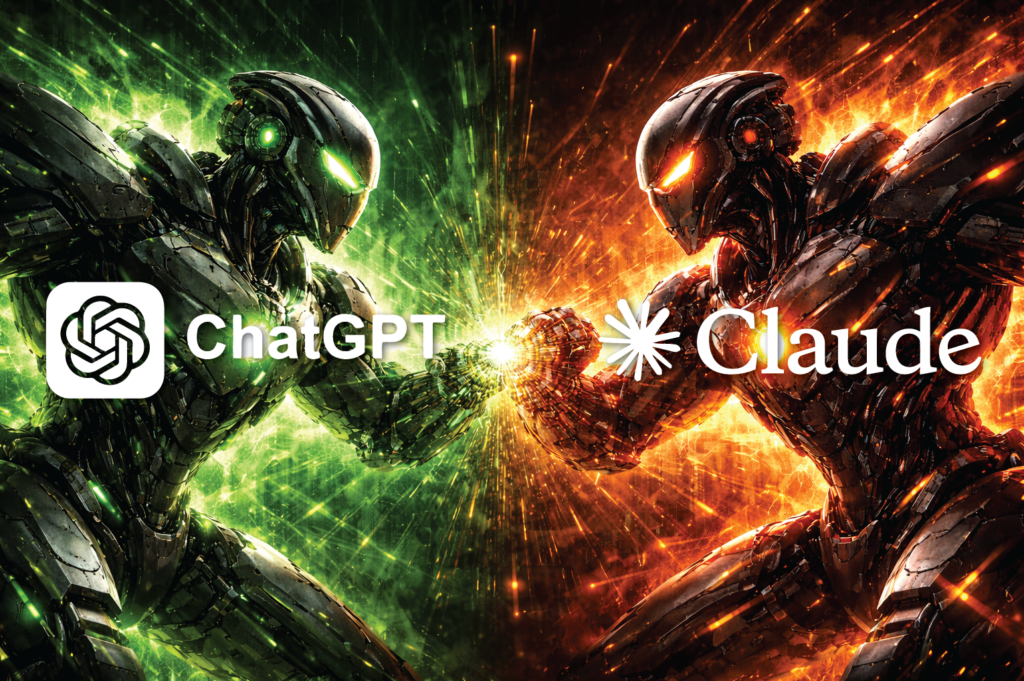
Today, we’re looking at Claude.ai and ChatGPT – two of the most well-known AI tools that claim to be optimized for coding. Yes, there are other services out there that promise better results, but these are the two names most tech-savvy people recognize. So let’s see how they actually perform.
Evaluation Criteria
Both services were evaluated across the following areas:
Usability of the code produced
Reliability of the code
Accuracy in coding and compilation
Efficiency in code generation
Proficiency in HTML5, PHP, Go, and Python
With that out of the way, let’s dive in — starting with ChatGPT.
ChatGPT: Promising, but Frustrating
If you’ve never used ChatGPT before, one thing I’ve consistently noticed is that it can be oddly argumentative. In my experience, it often tries to do the absolute minimum amount of work, sometimes at the cost of speed or correctness — whether you ask it to or not. This can be incredibly frustrating when you’re trying to solve a real problem.
During testing, much of the code ChatGPT generated was riddled with errors. When those errors were pointed out, it would either refuse to acknowledge them or veer so far off course that the original issue remained — along with a handful of brand-new ones. To be fair, this behavior isn’t exclusive to ChatGPT, but it’s far more prevalent there.
Another recurring annoyance: ChatGPT randomly deciding it no longer wants to generate ZIP files. It would claim that its backend file creation service was offline — despite being perfectly capable of producing ZIP files in a brand-new chat. More often than not, you have to call it out directly before it actually does what it’s supposed to do. It’s like dealing with a whiny, prepubescent child… except the child is writing code.
But enough about the personality quirks. Let’s talk results.
The Test Project
I gave both AIs the same task:
Build a complete website for a dental office, including a simple but usable web application written in Go and Python to manage patient accounts and scheduling.
As expected, both services produced very different designs. That’s normal — give two human developers the same specifications and you’ll get two different solutions.
The real difference was in the quality of the end result.
Claude.ai delivered a significantly better product on its first response, taking roughly 13 minutes to generate everything. It even added thoughtful features I hadn’t explicitly requested, such as relationships between patients and their records.
ChatGPT, on the other hand, took 4 minutes and 18 seconds and focused on providing a rough foundation rather than a complete solution. Much of its initial output was broken, incomplete, or outright incorrect.
Usability Score:
✅ Claude.ai takes the first point
Reliability
Once ChatGPT’s errors were ironed out — after about three to four additional prompts — it performed reasonably well. Claude.ai, however, held up better under stress testing right out of the gate.
ChatGPT struggled with even modest load testing and required an explicit prompt like “make this more resilient” before it showed meaningful improvement. Claude.ai didn’t need that extra guidance.
Reliability Score:
✅ Claude.ai takes the point again
Accuracy
Given ChatGPT’s tendency to return unchecked or syntactically invalid code, I was already leaning toward Claude.ai here — but I reviewed everything carefully.
ChatGPT did use some modern techniques and newer approaches aimed at efficiency, which deserves credit. However, its biggest shortcoming was the lack of comments. Any experienced developer knows that uncommented code might as well be rewritten from scratch if someone else has to maintain it.
Claude.ai, by contrast:
Commented its code thoroughly
Used proven, language-native patterns
Prioritized reliability and readability alongside efficiency
ChatGPT did well, but Claude.ai consistently went the extra mile.
Accuracy Score:
✅ Claude.ai wins again
Efficiency in Code Generation
This round was painful.
Both services delivered subpar results on the first attempt — technically within spec, but far from polished. After 8–10 additional prompts (and more than a few expletives), both projects became reasonably functional.
That said, Claude.ai clearly outpaced ChatGPT here. Claude largely understood what needed to be done and executed on it. ChatGPT spent a significant portion of those prompts asking follow-up questions — some of which had already been answered, and some it asked repeatedly.
This may be a limitation of ChatGPT’s conversational memory, but it severely impacted efficiency. Claude.ai didn’t require nearly as much hand-holding.
Efficiency Score:
✅ Claude.ai takes it
Language Proficiency
Both services demonstrated solid knowledge of the required languages. However, ChatGPT defaulted to doing as much as possible in Python, even when it wasn’t the best tool for the job.
Claude.ai made better use of each language’s strengths, resulting in a more balanced and cohesive system overall.
Proficiency Score:
✅ Claude.ai, once again
Final Verdict
Across usability, reliability, accuracy, efficiency, and language proficiency, Claude.ai is the clear winner.
That said, it’s not perfect. Even on a paid plan, Claude.ai’s usage limits are restrictive — something I found particularly frustrating, as it took me about five days to complete this article because of them.
Still, when it comes to producing functional, readable, and well-structured code with minimal babysitting, Claude.ai currently has the edge.
Just don’t expect it to replace a real developer anytime soon.